
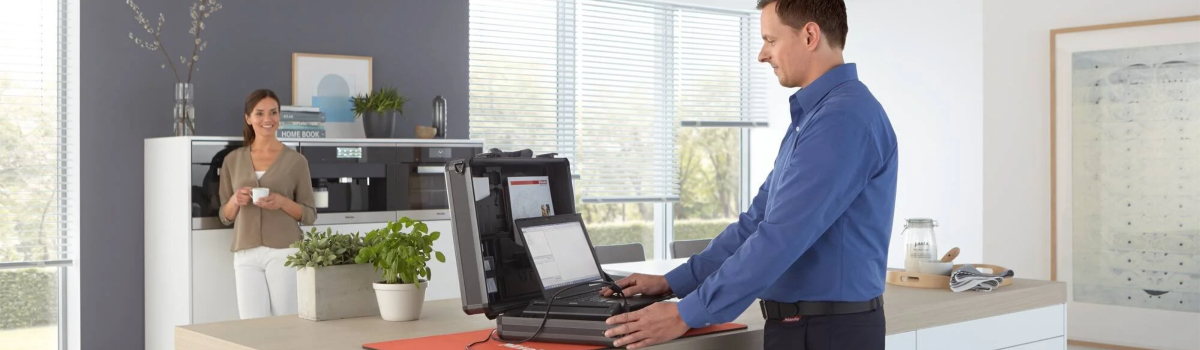
Welcome to our Miele appliance repair FAQ! Here, you’ll find answers to the most common questions about Miele washers, dryers, dishwashers, ovens, and refrigerators. Whether you’re troubleshooting a problem yourself or want to know when to call a technician, this guide will help.
1. Washer & Dryer Questions
Q: My Miele washer won’t start — what should I do?
Check that the door is properly closed and locked. Make sure the power cord is plugged in and the breaker hasn’t tripped. If everything looks normal, it might be a door lock or control board issue.
Q: Why is my dryer taking longer than usual to dry clothes?
Lint buildup in the filter, vent, or ductwork is the most common reason. Also, a failing heating element, thermostat, or sensor can slow down drying times.
Q: The washer fills but doesn’t spin — why?
It could be a broken belt, faulty motor, or an unbalanced load. Check the load size first, then inspect the drum and motor if the problem persists.
Q: My dryer makes a loud noise — is it safe to keep using it?
No — unusual noises often mean worn drum bearings, a faulty blower wheel, or something stuck in the drum. Stop using it until it’s inspected to avoid further damage.
Q: Can I clean the washer drum myself?
Yes! Use a mild washer-safe cleaner and run an empty hot-water cycle. Avoid harsh chemicals that can damage seals or electronics.
2. Dishwasher Questions
Q: My Miele dishwasher isn’t cleaning dishes properly — what can I check?
Check that spray arms aren’t clogged, filters are clean, and the detergent is fresh. Hard water can also leave streaks or spots.
Q: Water isn’t draining — is this a pump issue?
Often it’s a clogged filter or drain hose. Inspect both first. If the pump is faulty, it may need replacement.
Q: Why does my dishwasher display F84–F88 errors?
These codes usually point to water quality sensor problems, often from hard water or sensor failure. Cleaning or replacing the sensor usually resolves the issue.
Q: Can I run the dishwasher without a water softener?
Yes, but if your water is very hard, you may notice spots, mineral buildup, or faster wear on sensors and heating elements.
3. Oven & Cooking Appliance Questions
Q: My Miele oven is showing F188 — what does it mean?
This code indicates a meat thermometer error. Make sure the probe is properly inserted. If the error persists, the thermometer may need replacement.
Q: The oven isn’t heating evenly — is this normal?
No — it could mean a faulty heating element, thermostat, or incorrect calibration. Some ovens allow self-calibration cycles.
Q: Can I clean the oven myself without damaging sensors?
Yes — avoid spraying harsh cleaners directly on sensors or control panels. Use mild oven-safe cleaners and follow Miele’s instructions.
Q: My cooktop won’t ignite — what should I do?
Check for power, gas supply (if gas), and that burners are clean. Faulty igniters may need professional replacement.
4. Refrigerator & Freezer Questions
Q: My Miele fridge isn’t cooling properly — what should I check first?
Make sure vents aren’t blocked, coils are clean, and the door seals are tight. If cooling issues persist, it could be the evaporator fan, thermostat, or refrigerant system.
Q: There’s water pooling in the fridge — is it normal?
Some condensation is normal, but excessive water usually indicates a blocked drain or defrost issue.
Q: How often should I clean the condenser coils?
At least once or twice a year to maintain efficiency. Dusty coils make the fridge work harder and can trigger errors.
Q: My freezer is frosting over quickly — why?
It could be a faulty door seal, frequent door openings, or a defrost system problem. Inspect the seal and check defrost components.
5. Parts, Maintenance & General Service Questions
Q: Can I replace Miele parts myself?
Some simple parts like filters, knobs, or light bulbs can be replaced safely. Sensors, motors, and control boards are better handled by a professional.
Q: How often should I schedule professional maintenance?
Once a year is ideal to inspect washers, dryers, dishwashers, and refrigeration systems. This prevents small issues from turning into major repairs.
Q: Why do Miele appliances last longer than others?
High-quality components, precise engineering, and proper maintenance all contribute. Regular cleaning, safe use, and timely repairs keep them running efficiently.
Q: Do Miele appliances come with warranty service?
Yes — most new appliances have limited manufacturer warranties. Professional technicians can help with warranty-covered repairs or provide certified service for older units.
Q: How do I know if a problem is urgent?
Stop the appliance if you notice unusual noises, leaks, sparks, or repeated error codes. Address urgent issues immediately to prevent safety hazards or costly damage.